Traditional Japanese
Artzy PostersArtzy Posters renders the cartographic history of Japan through a fluid watercolour lens, blending the rigid lines of traditional architecture with the soft edges of a vintage travel log. This portrait piece reimagines the world map as a delicate wash of pigment, where geography feels like a lived memory rather than a static coordinate.
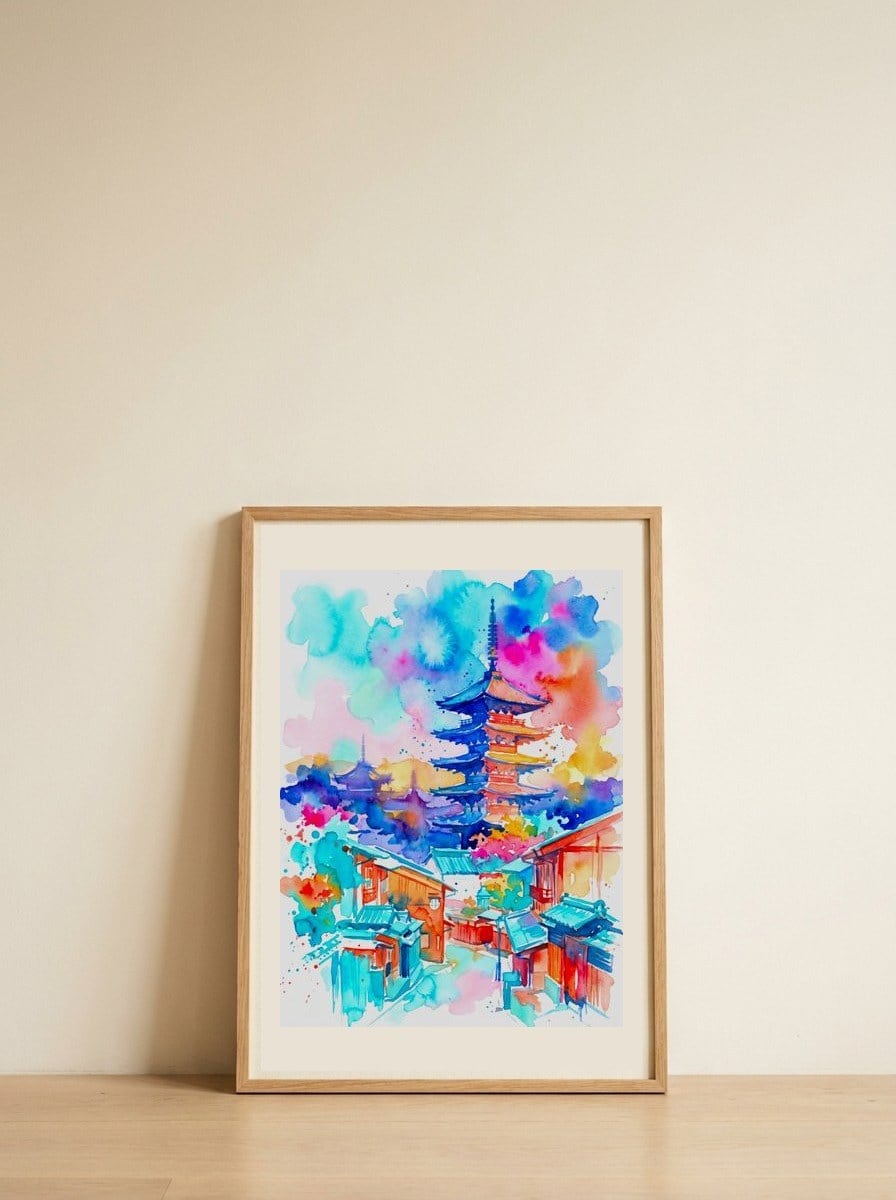
Traditional Japanese
Artzy Posters renders the cartographic history of Japan through a fluid watercolour lens, blending the rigid lines of traditional architecture with the soft edges of a vintage travel log. This portrait piece reimagines the world map as a delicate wash of pigment, where geography feels like a lived memory rather than a static coordinate.
28 × 35 cm · about ⅙ the width of a 3-seat sofa
A meaningful share of this purchase goes directly to Artzy Posters.
Every Arthaus piece supports a living artist.
Traditional Japanese
Artzy Posters
Art Analysis
A Watercolor Journey Through Cartographic Heritage
This composition anchors the viewer in a bygone era of exploration, utilizing a watercolour technique that allows colors to bleed and pool like ink on aged parchment. The inclusion of architectural motifs suggests a deep connection between the built environment and the natural terrain, framing the Japanese islands not just as landmasses, but as sites of cultural heritage. The portrait orientation emphasizes the verticality of the archipelago, inviting a top-to-bottom journey through its distinct regions.
By layering map-making elements with painterly textures, the work bridges the gap between technical documentation and fine art. The muted palette and weathered aesthetic evoke a sense of nostalgia, reminiscent of mid-century travel posters that celebrated the allure of distant lands. It is a study in how geography can be rendered through a soft, human touch, turning a navigational tool into a quiet reflection on place and history.
The artwork utilizes the aged textures and detailed grids of historical world maps to provide a rich, weathered background for the central subject.
Soft pigment washes create a sense of movement and atmosphere, softening the structural lines of the map.
The integration of structural forms highlights the relationship between Japan's built identity and its geographic borders.
Free Shipping
On all framed orders
100-Day Guarantee
Love it or return it
Gallery Quality
Museum-grade materials
Artist-Direct
Fair pay, every piece
More to Discover
More from Artzy Posters
ArtistMore of Artzy Posters’s work, hand-picked from the collection.