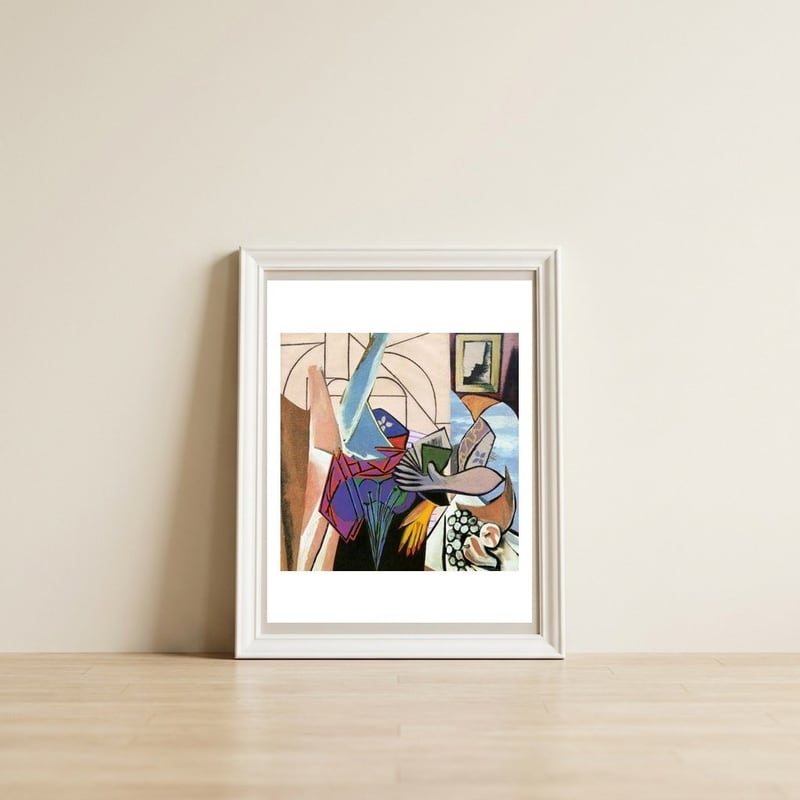
Portrait Disaster · 1932 In My Memories B
MarkoKoeppeMarkoKoeppe constructs memory as a fractured, layered event where the human form is both preserved and dismantled through digital collage. This piece navigates the tension between a classic portrait and a visual disaster of overlapping textures, suggesting a mind trying to piece together a fading 1932 history.

Portrait Disaster · 1932 In My Memories B
MarkoKoeppe constructs memory as a fractured, layered event where the human form is both preserved and dismantled through digital collage. This piece navigates the tension between a classic portrait and a visual disaster of overlapping textures, suggesting a mind trying to piece together a fading 1932 history.
A meaningful share of this purchase goes directly to MarkoKoeppe.
Every Arthaus piece supports a living artist.
Art Analysis
A Fractured Glimpse into the Architecture of Memory
MarkoKoeppe utilizes the language of Pop Surrealism to explore the instability of the past. By layering graphic representational imagery within a landscape orientation, the artist creates a sense of portraiture where anatomical accuracy is intentionally disrupted to reflect the messy nature of recollection. The work feels like a found object from an alternate history, blending varied brushwork techniques with the sharp edges of digital assembly.
The composition challenges cultural norms of portraiture by prioritizing symbolic conceptual art over a clear likeness. Within its classic frame, the piece acts as a disruption of logical conventions, inviting the viewer to look past the surface of the face and into the sociopolitical echoes of a bygone era. It is a study of how memory functions—not as a clear window, but as a textured, surrealist landscape of fragments and gathered moments.
The artist blends humor with dreamlike juxtapositions, placing everyday produce alongside industrial machinery in a strange, logic-defying landscape.
The work purposefully breaks traditional spatial rules to create a sense of wonder and psychological disorientation.
The piece mimics the aesthetic of physical collage, using graphic elements as if they were salvaged materials from a 1932 archive.
This work moves away from literal representation to explore the conceptual weight of identity and historical memory.
Free Shipping
On all framed orders
100-Day Guarantee
Love it or return it
Gallery Quality
Museum-grade materials
Artist-Direct
Fair pay, every piece