No01 Tsuru Origami Geometric Poster
ChungkongChungkong deconstructs the traditional symbol of the crane into a sharp, rhythmic assembly of mid-century geometry. This piece captures the spirit of the tsuru through a bold interplay of primary-leaning hues and minimalist paper-fold logic.
No01 Tsuru Origami Geometric Poster
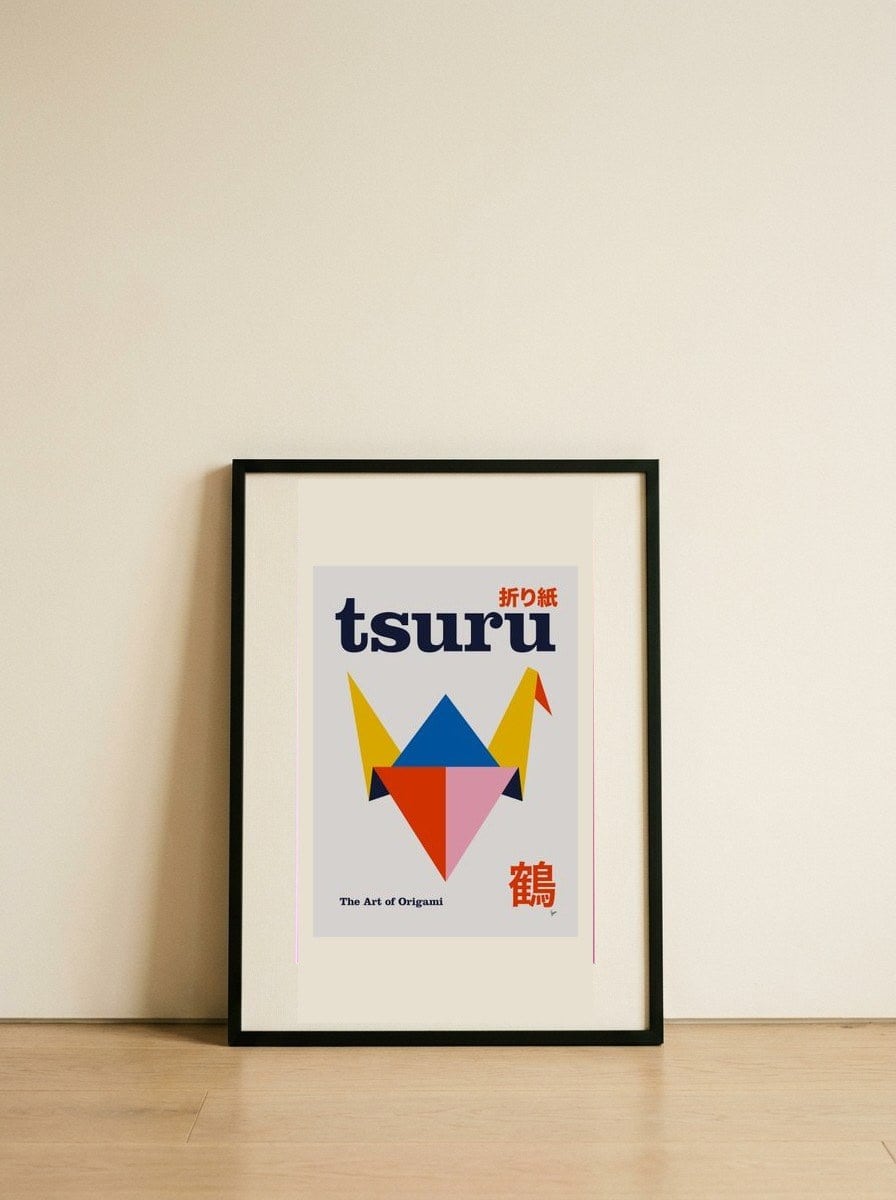
Chungkong deconstructs the traditional symbol of the crane into a sharp, rhythmic assembly of mid-century geometry. This piece captures the spirit of the tsuru through a bold interplay of primary-leaning hues and minimalist paper-fold logic.
28 × 35 cm · about ⅙ the width of a 3-seat sofa
A meaningful share of this purchase goes directly to Chungkong.
Every Arthaus piece supports a living artist.
No01 Tsuru Origami Geometric Poster
Chungkong
Art Analysis
From the artist, Chungkong
Tsuru. The Japanese name for crane. Kanji (traditional): 鶴 The crane is a symbol of longevity, good fortune, fidelity, and happiness. This poster is part of a bold, artistic Bauhaus Origami poster series, which combines mid-century modern design with minimalist, animal-inspired geometry. A stylized origami crane is created using bright geometric shapes in blue, yellow, and pink. The crane is set against a neutral background with bold typographic elements.
The geometry of longevity through minimalist paper folds.
In this composition, Chungkong reimagines the Japanese tsuru—a symbol of longevity and fidelity—through the rigid yet playful lens of the Bauhaus movement. The crane is built from a precise arrangement of blue, yellow, and pink shapes, mimicking the deliberate folds of origami while stripping away unnecessary detail. Set against a neutral backdrop, the vibrant geometric form gains a sense of weight and architectural balance, anchored by bold typographic elements that ground the ethereal bird in graphic reality.
By merging mid-century modern design with animal-inspired geometry, the artist bridges the gap between ancient cultural motifs and industrial-age aesthetics. The use of flat color and sharp angles creates a visual energy that feels both disciplined and joyful. It is a study in how minimal lines can evoke complex meanings, turning a traditional emblem of good fortune into a striking exercise in modern abstraction.
The artwork utilizes primary-inspired colors and rigid shapes to reconstruct a natural form through industrial design principles.
The crane is rendered as a series of flat, colorful planes that mimic the tactile process of Japanese paper folding.
A sense of peace and good fortune is conveyed through a stripped-back visual language that avoids clutter.
Free Shipping
On all framed orders
100-Day Guarantee
Love it or return it
Gallery Quality
Museum-grade materials
Artist-Direct
Fair pay, every piece