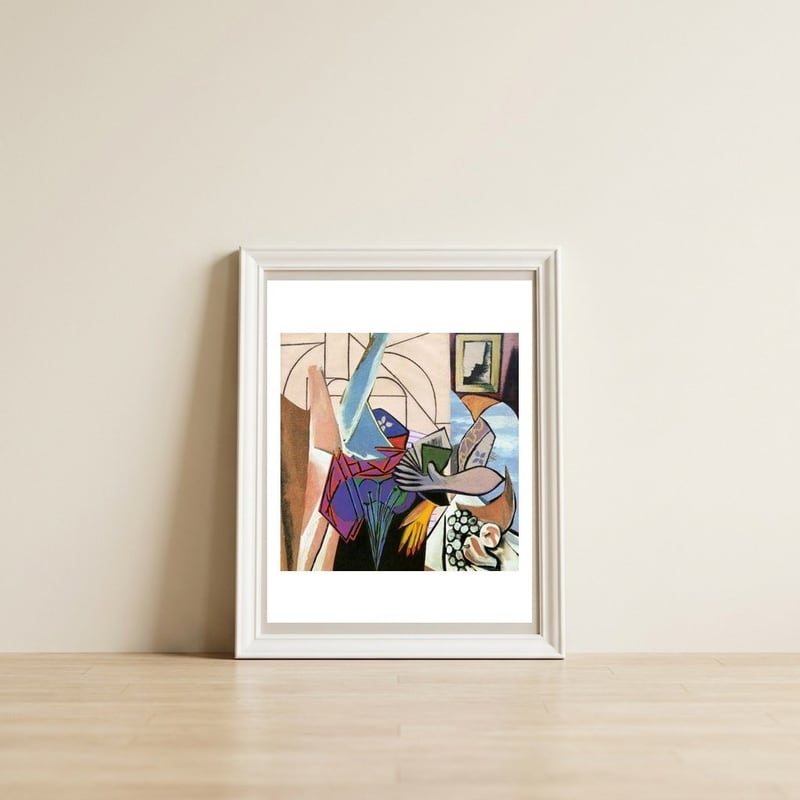
Indian Family Portrait Disaster · Big One 2
MarkoKoeppeMarkoKoeppe assembles the "Indian Family Portrait Disaster · Big One 2" by layering fragmented anatomical details against a backdrop of rhythmic patterns and sharp color contrasts. The work captures the friction of identity through a collage of grayscale forms that feel both clinical and deeply emotional.

Indian Family Portrait Disaster · Big One 2
MarkoKoeppe assembles the "Indian Family Portrait Disaster · Big One 2" by layering fragmented anatomical details against a backdrop of rhythmic patterns and sharp color contrasts. The work captures the friction of identity through a collage of grayscale forms that feel both clinical and deeply emotional.
A meaningful share of this purchase goes directly to MarkoKoeppe.
Every Arthaus piece supports a living artist.
Art Analysis
A rhythmic deconstruction of the collective human identity
In this work, MarkoKoeppe utilizes collage and cut-out techniques to explore the dense layers of human experience. By placing grayscale anatomical elements alongside vibrant, dynamic color juxtapositions, the artist creates a visual tension that mimics the messy reality of family dynamics and personal history. The arrangement feels rhythmic, almost musical, as forms overlap and intersect within the landscape orientation, suggesting a narrative that is being both built and dismantled simultaneously.
The piece leans into the surreal, using abstract expressionism to challenge the idea of a fixed identity. While the title suggests a disaster, the visual execution is a deliberate study of form and pattern, where the complexity of human identity is laid bare through a mix of precise illustration and ethereal abstraction. It is a portrait not of faces, but of the intricate, often fragmented connections that bind individuals together in a shared space.
Through the use of collage, the artist explores how individual and collective identities are pieced together from various cultural and personal fragments.
bruxamagica employs ambiguous imagery to place female astronauts and desert inhabitants in a dreamlike sci-fi setting.
The artist uses a specific color spectrum to create a dialogue between the earthy tones of oxidation and bright, applied pigments.
The arrangement of shapes suggests a tribute to the human form without relying on literal representation.
Free Shipping
On all framed orders
100-Day Guarantee
Love it or return it
Gallery Quality
Museum-grade materials
Artist-Direct
Fair pay, every piece