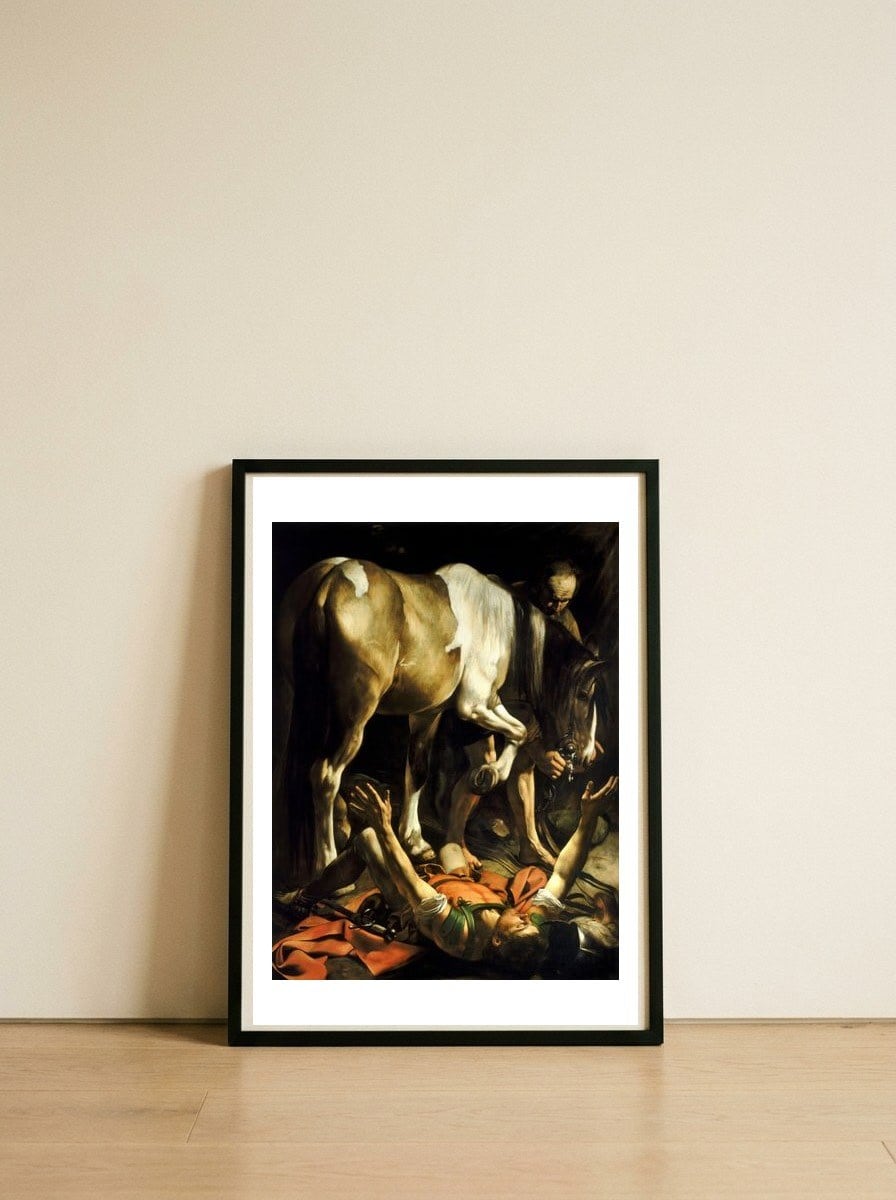
Caravaggio – The Conversion of Saint Paul (c.1601)
William MorrinCaravaggio commands the darkness to reveal a moment of profound spiritual upheaval, using light as a physical force that strikes the figure of Saint Paul. This composition isolates the weight of a private revelation, grounding a celestial encounter in the raw, tactile reality of earth and shadow.
Styling images show a frame. Print sold unframed.
Caravaggio – The Conversion of Saint Paul (c.1601)
Caravaggio commands the darkness to reveal a moment of profound spiritual upheaval, using light as a physical force that strikes the figure of Saint Paul. This composition isolates the weight of a private revelation, grounding a celestial encounter in the raw, tactile reality of earth and shadow.
28 × 35 cm · about ⅛ the width of a 3-seat sofa
A meaningful share of this purchase goes directly to William Morrin.
Every Arthaus piece supports a living artist.
Caravaggio – The Conversion of Saint Paul (c.1601)
William Morrin
Art Analysis
From the artist, William Morrin
A Private Revelation Captured in Striking Light and Shadow
In this 1601 masterpiece, the artist employs a radical approach to religious narrative by focusing on the internal shock of the conversion. The scene is stripped of heavenly clouds or angelic choirs, instead placing the viewer on the ground alongside the fallen figure. The stark contrast between the deep, ink-like shadows and the sharp illumination on the horse and the man creates a sense of immediate, heavy presence that defines the Baroque era's push toward realism.
Every texture is rendered with the deliberate weight of oil paint, from the coarse hide of the horse to the splayed limbs of the future saint. By choosing a portrait orientation, the composition forces an intimate encounter with the subject's vulnerability. The work functions as a study of human emotion under the pressure of the divine, making the historical event feel tangible and urgent through its bold use of light and shadow.
The dramatic interplay of light and dark defines the emotional stakes of the scene, pulling the subject out of total shadow.
The piece treats a religious milestone with a gritty, grounded honesty that emphasizes the physical reality of the moment.
The composition focuses on the intense, solitary experience of a life-changing epiphany through a vulnerable pose.
Free Shipping
On all framed orders
100-Day Guarantee
Love it or return it
Gallery Quality
Museum-grade materials
Artist-Direct
Fair pay, every piece
Complete the Wall
This piece is part of a wall our team put together — shown with the works chosen to sit beside it.

More to Discover
More from William Morrin
ArtistMore of William Morrin’s work, hand-picked from the collection.